
Life's Do Overs
I was thinking about 2012 and all the anticipation its brought to so many people. After reflecting on all the reasons that it's held us enthralled one simple thought rang out. 2012 offers a chance to really start anew with a blank slate. The more I thought about that blank slate, it seemed that like kids or casual golfers, we're looking down the barrel of a real-life Do-Over. 
Life is so full of promise and opportunity, especially when you're young. Goals get set and each one seems achievable. You're invincible! You can do anything and conquer any challenge. Then something happens along the way. John Lennon called it life. He said, "Life is what happens when you're busy making other plans." He said that in a song lyric written just before he died.
But what about us? What about the goals and invicibility? As we get older, go off to college, get a job, assume more and more responsibility, perhaps get married and have children, the goals go dormant. All the promises and ideas we had sort of go into limbo. Most of the time, even the dreams get put aside. Every so often we're reminded of them, but usually it takes a crisis - health, job loss, death in the family, or even age - to revive the old thoughts or ideals of our youth. As the crisis unfolds we finally take time to look back on the life journey and wonder how the choices of the past took us to this point.
But what if we took a moment at this stage in life to reflect on what's important now? Is what we're doing now different from what was important in our youth? Can the dreams be re-captured? What if the dreams aren't lost but were merely shelved? We often ask "God" to help us out of the crisis and usually make promises that go for naught. But, what if there was a chance to "do over" our life?
Recently, I read an article about a hospice care-giver who spent most of her time with patients in the final stages of their lives. She noticed most people grow the most when faced with their own mortality. So she undertook a project of asking her patients what were the five things they most regretted in life or would have done differently. The patients, knowing they were in the final hours of their lives, wished they had done many things before it was too late.
Their Life Do-Over wishes were more than a list. The Do-Overs were really a philosophy of living. They spoke of being true, having courage, nurturing friendships, and expressing joy. Their top five said:
patients what were the five things they most regretted in life or would have done differently. The patients, knowing they were in the final hours of their lives, wished they had done many things before it was too late.Their Life Do-Over wishes were more than a list. The Do-Overs were really a philosophy of living. They spoke of being true, having courage, nurturing friendships, and expressing joy. Their top five said:
1) I wish I had the courage to live a life true to myself instead of the life others expected of me.
2) I wish I hadn't worked so hard.
3) I wish I had the courage to express my feelings.
4) I wish I had stayed in touch with my old friends.
5) I wish I had let myself be happier.
2012 opens the gateway to the new world prophecies. We have a clean slate and can write anything on it. We have more than the hospice patients. We have the dreams, the memories, the friendships and the awareness. And, better yet, we have the time. It's not too late for us!
2) I wish I hadn't worked so hard.
3) I wish I had the courage to express my feelings.
4) I wish I had stayed in touch with my old friends.
5) I wish I had let myself be happier.
2012 opens the gateway to the new world prophecies. We have a clean slate and can write anything on it. We have more than the hospice patients. We have the dreams, the memories, the friendships and the awareness. And, better yet, we have the time. It's not too late for us!
Jo Mooy - April 2012


 more specifically, in the northern Native American tribes, the Mothers of the Clans were held in sacred reverence. These Clanmothers were the historians, the faith-keepers, spiritual advisors, and the ones who chose tribal leaders. They served in rituals, ceremonies, medicine and spiritual events. As life-givers, their role was keeper of the culture and history of the tribe.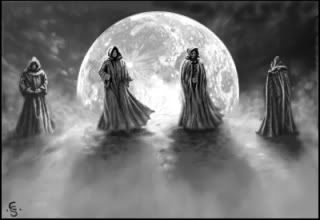
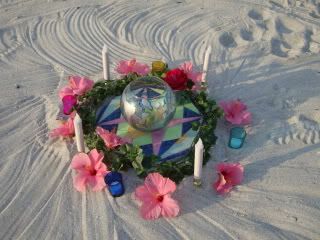
 colored the world that I see ever since I first heard it and it's become a pseudo-mantra in raising my own consciousness. When confronting any challenge, life change, large or minor life situation, the mantraWhat's Love Got To Do With It? puts a spin on the event that begs for more careful examination of what's being observed.
 years, their mission was to fly to Jupiter and Saturn. Then maybe, if everything worked out just right and the mechanical parts didn't freeze up, go past Uranus and Neptune. Thirty years later they're now poised at the edge of our solar system and headed for deep space.
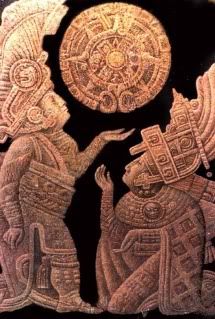 messenger out of time that told us about an ancient culture. The Mayan Disc presented a time-capsule of their recorded history, and shone a light on their knowledge of astronomy and mathematics. The calendars within calendars explained the governance of their land, how they measured time, and best of all indirectly gave hope to future generations - ours.
  consider another species finding the discs, deciphering the messages, and visiting earth. Who knows, maybe our great great grandchildren will be the ones traveling to distant galaxies to find the discs.
  the transformational eve for the major prophecies about 2012. So I took a journey into the history of predictions and was surprised where I ended up.
  Well publicized predictions through the ages are easy to find but not so the more subtle evidences of 'hope'. While preparing to write the December article a story found me. It's depth and scope was heart-warming. It was a story that showed how Hope remained kindled in the hearts of a group of men for more than 70 years even as their numbers dwindled. Their story is an indicator of human patience, conviction and finally justice. It's evidence of humanity's belief that "it will get better next year." From that perspective all the predictions of 2011 came into focus.
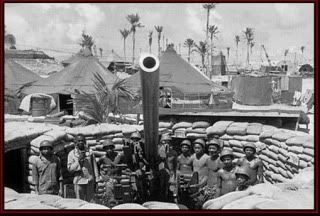 and kept in segregated units. When deployed, they sat in segregated trains. If the "black cars" were full, they had to wait for the next train, even if the white cars were empty. Their service was restricted to support services like defending the base or hauling ammunition to the front lines of battle. In the South Pacific these Marines carried their injured white counterparts back to safety while others readily picked up the weapons of the white Marines who were killed in battle. They stayed and engaged the fight before being ordered back to the rear at the conclusion of the battle.
 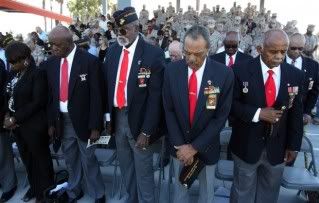 Amid all the financial, political, and environmental predictions about 2011, no one paid any attention to the dwindling number of Montford Marines, now in their 80's and 90's. That is until the current Marine Commandant heard about them and looked into their story. It so captured his attention he wanted to rectify the wrongs of the past. He ordered that all new recruits be taught the history of the Montford Point Marines along with the rest of the Corps' legacy. He incorporated their story into the curriculum of advanced classes for senior officers. Then he went a step further.
 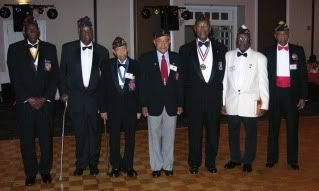 emotions said, "At last I feel like a real marine!" When their bravery in the jungles of the south Pacific was mentioned, one said, "We did everything to prove our mettle, but it never seemed to be enough until now." One of the Montford Marines told a black officer "I feel so much pride seeing you in that Marine uniform. It's enough to make an old marine cry." The officer responded, "I owe it all to you, Sir! I stand on your shoulders."